What mastering can and cannot do
Mastering at Nelkenshift focuses on final balance, release sequencing, delivery formats and controlled loudness. It will not rescue a vocal buried under guitars or a bass phase problem—fix that in mixing, with up to 2 feedback rounds, before mastering.
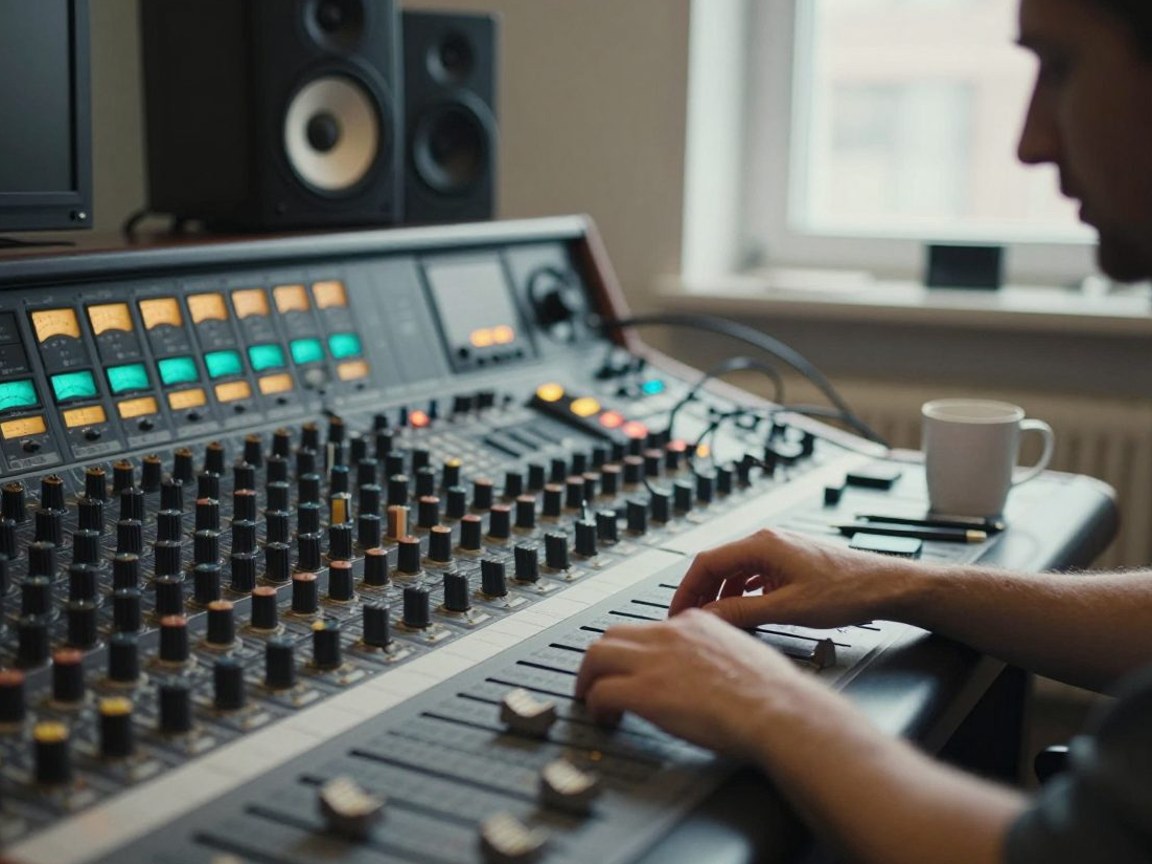
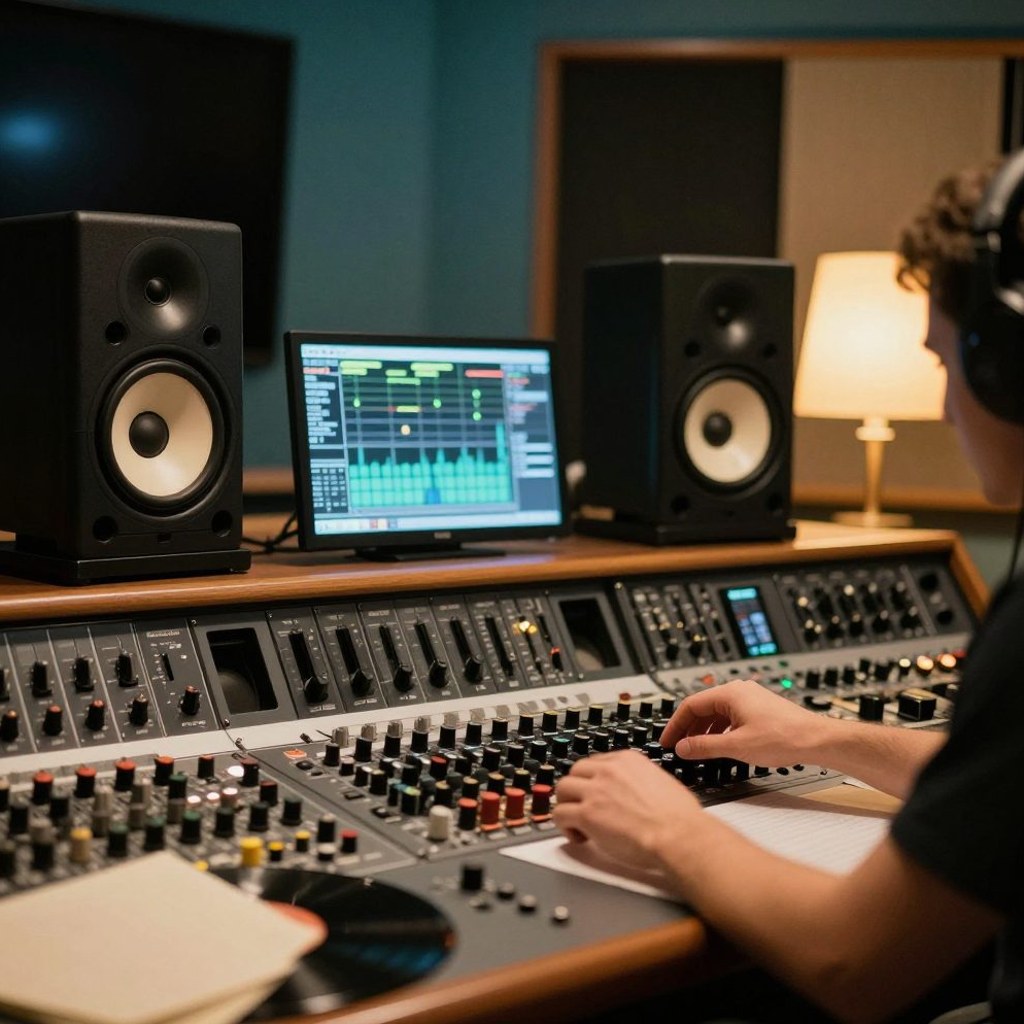
Our engineer works on midfield monitors in a treated room and expects mixes with air, not masters already slammed to −1 dBFS.
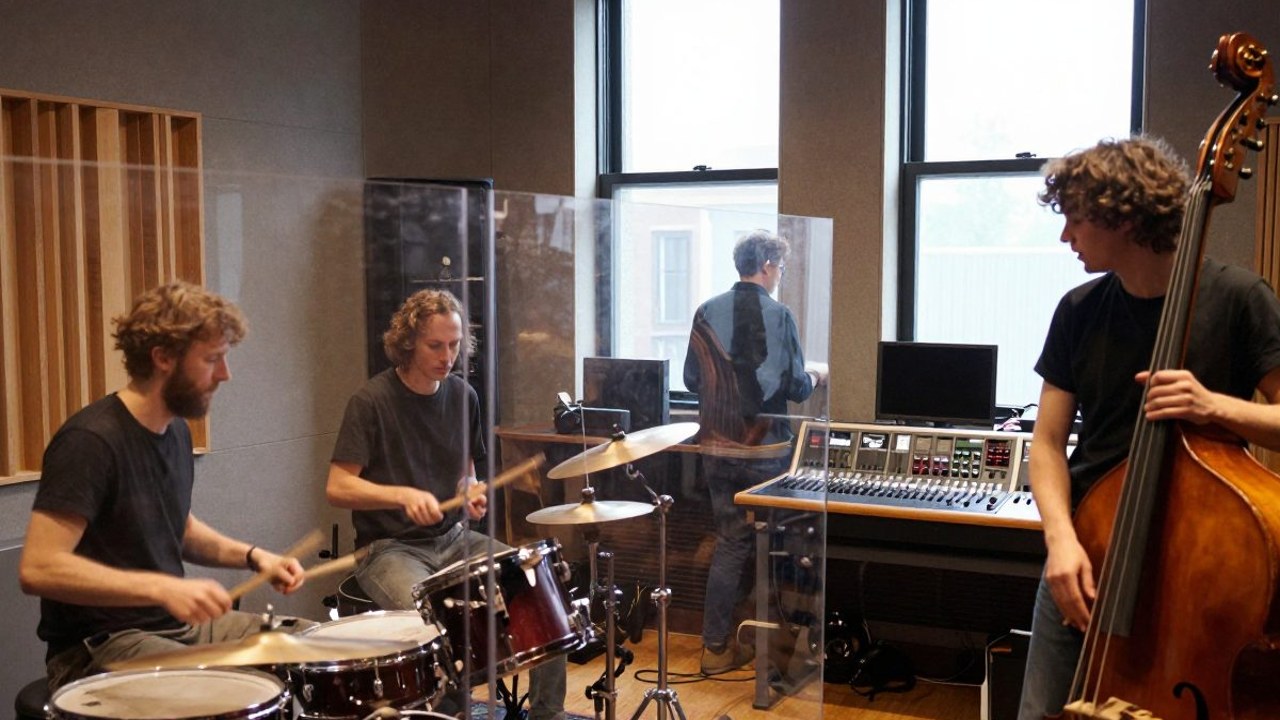
If you tracked in our 42 m² live room or vocal booth, mention which takes were final when you send the mix.
LUFS and true peak briefly
LUFS describes average perceived level across a song. Many streaming services normalise music near −14 LUFS integrated—algorithms differ and change, so verify your distributor’s current upload notes.
True peak includes intersample peaks. Stay clearly below 0 dBTP (often −1 dBTP or lower) to survive codec conversion. You do not need to hit −14 LUFS exactly in the mix; something healthy around −18 to −14 with headroom is usually fine.
Mix bus processing
Light bus compression for glue is fine; a limiter grinding 4 dB of reduction leaves little for mastering. Disable unlicensed «maximizer» trials before export.
Print 24-bit WAV without dither pre-master. Keep fades and reverbs tails; EP sequencing may use them. Stem habits live in exporting stems for mixing.
Leave a few decibels of peak headroom even when meters look clean; intersample peaks show up after export. When unsure, send one bounce without mix-bus limiting and label it clearly.
Genre and dynamics
Acoustic or dynamic material can breathe more than heavy EDM—normalisation is not automatically «punishing» quiet songs, but an overly soft mix can feel weak next to loud references. Compare within genre on the same speakers.
Speech-first projects differ from music mastering but share peak rules. See vocal recording or podcast recording when relevant.
Many listeners in the Netherlands first hear releases on phones or earbuds—quick mono and small-speaker checks before upload still help.
References and notes
Send two or three reference tracks (links in email) plus short notes: «vocals slightly forward», «warmer than ref A». For EP mastering at €225 or album €425, include order and gaps.
Mention vinyl early if planned—bass and level treatment change. We deliver digital masters for streaming/download unless agreed otherwise.
Include the ISRC list only when you already have codes; otherwise say so in the mail so metadata is not guessed.
Pre-upload checklist
- No clipping on tracks or mix bus.
- True peak safely below 0 dBTP.
- Integrated loudness not extreme—leave mastering room.
- Mono-check vocal and bass.
- Consistent sample rate; sensible fades.
- Filename: artist – title – mix v1.
Upload via agreed link or deliver to Govert Flinckstraat 142; contact coordinates.
Pricing, VAT and revisions
Rates such as €75 include 21% VAT. We handle reasonable technical tweaks after master; large mix changes belong in a new mix session, not unlimited free masters.
Invoices show NL806374020B01; payment terms follow terms and conditions. In-house mixing plus mastering keeps one point of contact.
Combine this with disclaimer awareness: platform loudness rules change; we tune for musical balance, not a single arbitrary number on every service.
Related guides
Fresh tracking? Read exporting stems and mixing. Vocalists: vocal warm-up. File questions: FAQ. Ready to master? Email [email protected] or contact during Mon–Fri 10–22, Sat 11–18.